PROCESS
Four steps from the first visit to the second cell. The pilot is the decision point, and it is designed so that stopping there is a real option.
- 01ASSESSAssess
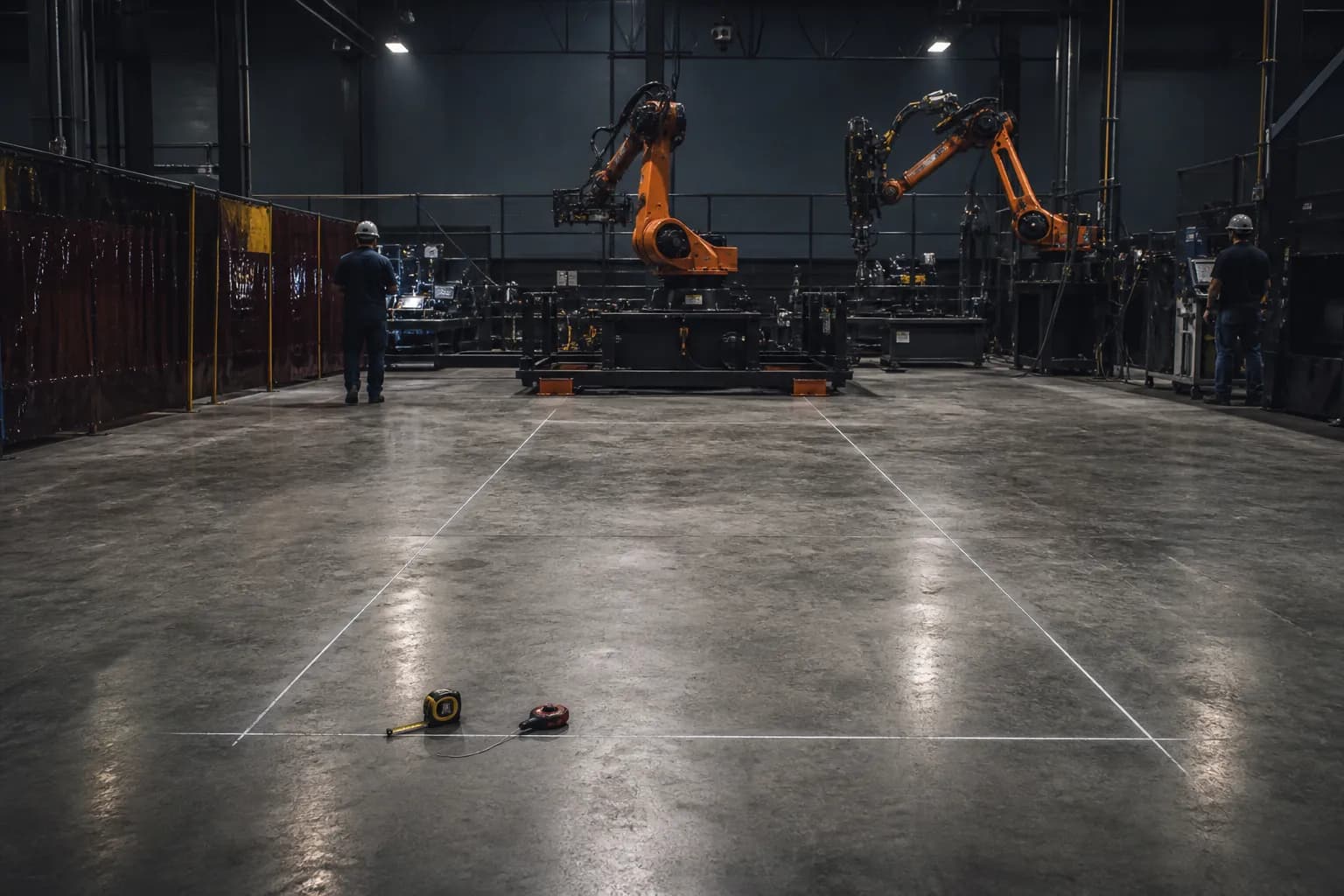
We come to the shop and watch the operation you want to hand over — prints, sequence, fixtures, floor space, power, and the people who would run the cell. You get a layout and a straight read on which operations suit a cell and which do not.
- 02PILOT CELLPilot cell
One cell, your parts, a fixed scope. It runs a real batch on your floor with our technician beside it. Nothing is committed beyond the pilot — if the operation does not suit a cell, that is a finding, not a failure.
- 03RUNRun
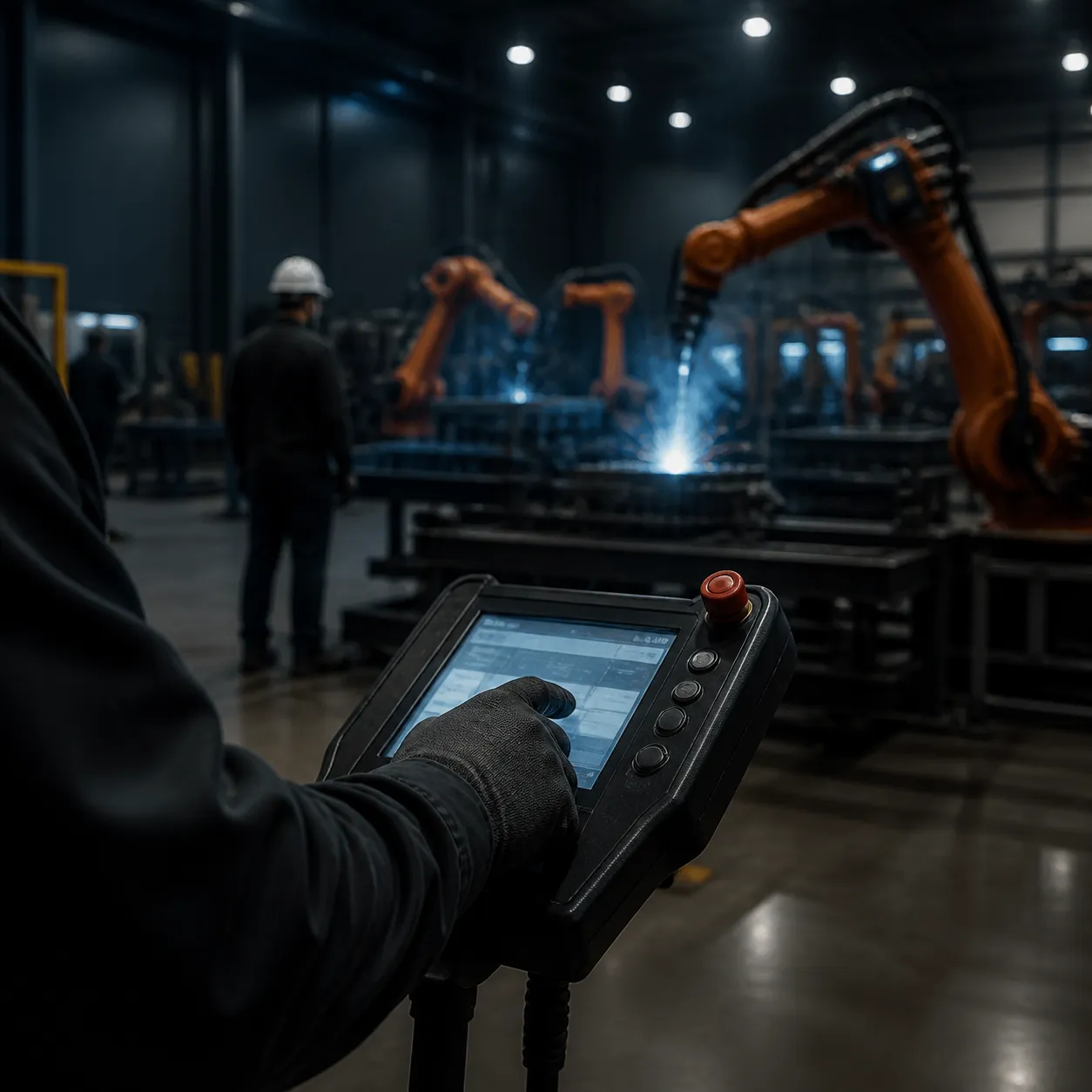
Handover is people, not paperwork. Your operators start the shift, load the fixture and read the cell. We stay on the floor through the first production weeks and leave the programs, the fixtures and the maintenance intervals in your hands.
- 04SCALEScale
When a second cell makes sense it is a copy of the first — same controls, same program structure, same spares on the shelf. What your people learned running one carries across without a new vocabulary.
Questions
- Do we have to change our parts to suit a cell?
- Usually not, and we would rather you did not. Cells are built around parts as drawn. Where a small change to a fixture datum or a flange would make a cell far simpler, we raise it during the assessment and leave the decision with your engineers.
- What happens to the people who run the operation today?
- They run the cell. Loading, fixture changes, first-off checks and every judgement call stay with them. A cell takes the repetition out of a job; it does not take the job.
- Who owns the programs and the fixtures?
- You do. Programs, fixture drawings, tool lists and maintenance intervals are handed over as files at the end of the pilot. Nothing in the arrangement stops you from editing them or from asking someone else to.
- What if the pilot does not work?
- The scope ends and you keep the assessment and the fixture design. Some operations belong to hands — thin variable work, one-off repair, anything where the next part is genuinely unlike the last. Saying so early is cheaper for both of us.
PUT AN ARM ON IT.
Send a print and the operation you would hand over first. We will tell you whether it belongs in a cell before anyone talks about a quote.
TALK TO US